
When I Played Madame
Contemplating pseudo-sex work in an Old West town

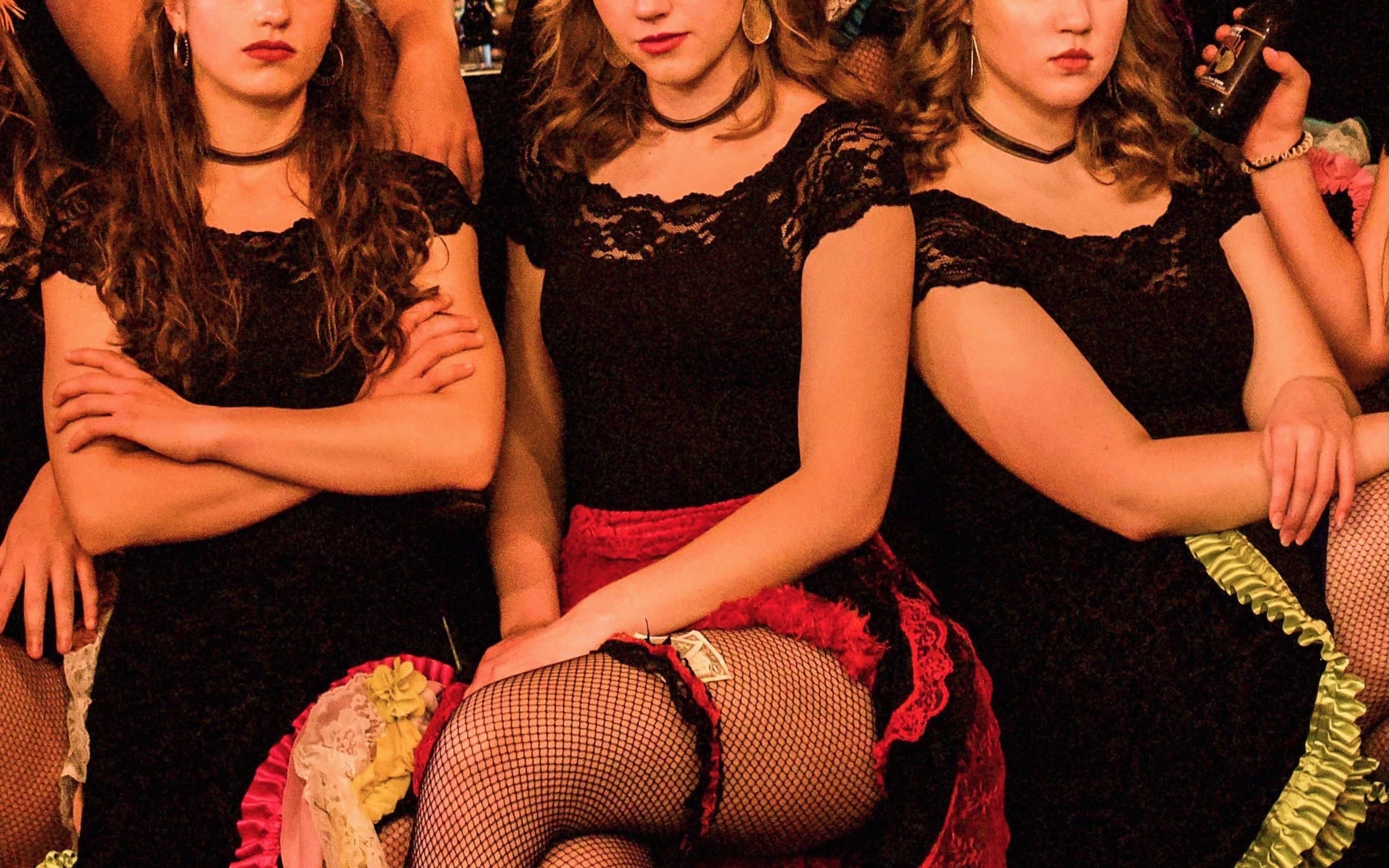
The summer of 2020 was my last summer as the Madame of the Crystal Palace Saloon.
In the dim backstage dressing room, I donned my red lips and my heels, fishnets stretched across my legs, a lace garter slid precariously high on my thigh with a single dollar bill secured against my flesh. The other girls—my girls—were still readying themselves. Out in the saloon, the player piano Sam plinkered out his tunes.
The show always began with a gunfight. Our crew ushered the audience outside to stand in the gravel parking lot among their RVs and campers and boat trailers, and us showgirls watched from the boardwalk as the cowboys, our male counterparts, fought about owing each other money, ending with a rigged duel and a shootout that left all but the sheriff lying in the dirt. Then I aimed my pistol and took the final shot.
Such were times in an Old West town.
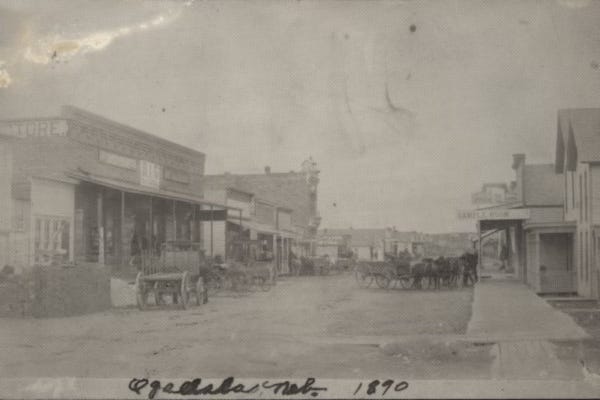
The town of Ogallala, Nebraska, was born of the Texas Trail, forged by cattle barons to drive Dallas longhorns the newly-established Union Pacific Railroad. Beginning in 1875, the town welcome tens of thousands of cattle each summer, and a whole of cowboys along with them. Hardy and troublesome men, they received their pay and spent it at local saloons, including one called the Crystal Palace. There, they lost hands of poker. They drained bottles of whiskey. And they indulged themselves in the dozens of women, recruited from nearby towns, who had been hired to entertain them.
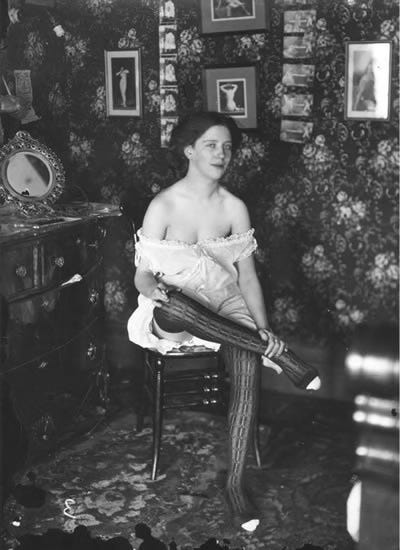
There is an entire lexicon of words to describe the sex workers of the American Western frontier. Soiled dove is one of the most prominent, probably because it strikes the perfect chord of innocence and grime, but other terms include painted ladies, calico queens, sporting women and prairie nymphs.
Little information about these women has survived.
Lola was my Crystal Palace name. At the Crystal Palace Saloon, we couldn’t use our own. It would detract from the historical accuracy of the show, which was to preserve Ogallala in its wanton hey-day, so sunburned tourists could interact with real cowboys and real…showgirls. Britney, Maylee, Emma—no, those names could not do. Britney became Kitty, who was “always on the prowl!” Maylee was Daisy Mae, because “some days I may and some days I may not.” I was Lola because, well, you know.
Only a few names of Ogallala’s actual historical prostitutes have survived to this day. Bronco Moll was the name of one Ogallala saloon girl, who visited during the summer for the cattle drives and then retreated elsewhere in the winter—likely to Denver, Colorado or Cheyenne, Wyoming. Another woman is identifiable by two names: Eva Raymond was the true name of the fancy lady known as Little Curley Hair.
And still another name is a parody of sorts.; a young woman who floated between several frontier towns, including Ogallala, was known only as “Billie the Kid,” not to be confused with Billy the Kid, the outlaw gunslinger who was running rampant at the time, gunned down in New Mexico in July of 1881, peak cattle drive season. Basically, Billie had a very funny name akin to a drag persona.
The only recorded brothel madame in Ogallala history is a woman known by the name of Big Alice. Her identity is largely a mystery. No information exists about what she looked like (besides being big????) or where she was from, though my Ogallala historian friend believes she was a local woman. She’s only mentioned in one town story, which is about the lawless cowboy Billy Thompson. According the legend, Alice threw Thompson out of her saloon, and he returned later to seek revenge. A gunfight went down, and though Alice came away unscathed, the local saloon manager Bill Tucker lost three fingers to the gunfire.
Three months into my first year at the Crystal Palace Revue, I started performing the Madame track. This was the leading lady role. As the Madame, I wore a red velvet costume and perched on a lace-draped stool near the audience, which meant I didn’t have to dance with a too-short cowboy for half the show. And I wasn’t just Lola anymore. I was Miss Lola (and no, not Big Lola, thank you very much).
The Madame also sang a special solo halfway through the show, where she waltz through the crowd and declared her love for the saloon, no matter how dingy and grimy a place it was. “Saloon, saloon, saloon,” the lyrics went. “It runs through my head like a tune.” I think some of the happiest moments of my life were spent singing that song.
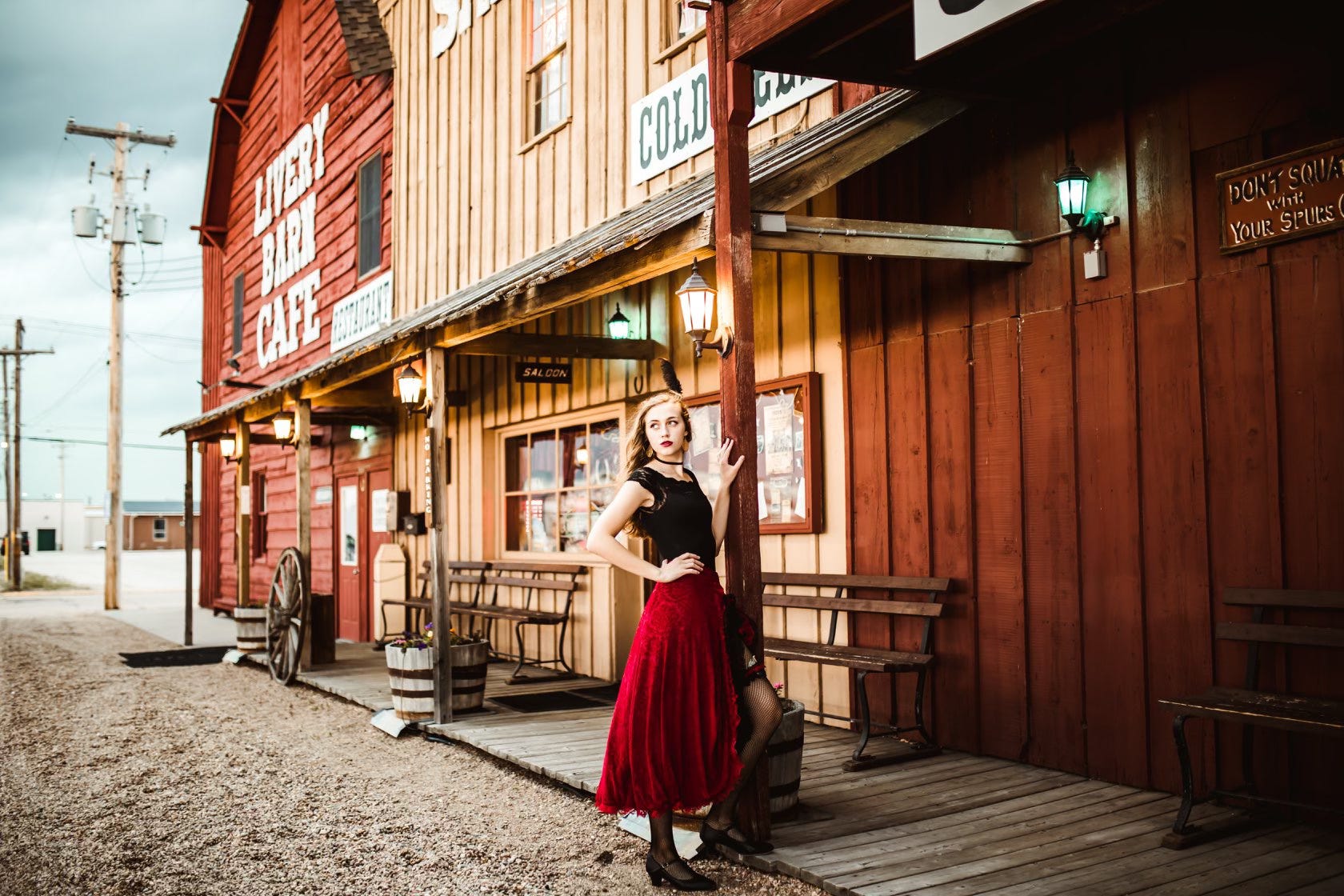
In the end, I did four seasons at the Crystal Palace Revue, and I performed as Madame as often as I could. It wasn’t until my final year that I learned about Big Alice, and I wondered if I had gone about it all wrong. Because all this time, I had been participating in a ruse.
Because in 1884, the original Crystal Palace Saloon burned. The cowboys had stopped coming, and with the destruction of its den of sin, Ogallala eased into a chapter of unremarkability until the 60s, when the town dreamt up a tourist trap. They called it Front Street, a Wild West escape with food and entertainment and business space, all rolled up in an old-timey building, complete with a wooden boardwalk and a facade. When Front Street opened in 1964, the crowd favorite quickly became the new Crystal Palace Saloon, which housed a summer theater performance of local young actors and actresses, reanimating the town’s heyday in all its Wild West glory.
The Crystal Palace Revue that I participated in toed the line between history and fantasy. Children sat in the front row with their Shirley Temples, and after the show, we helped their parents pin sheriff’s badges to their shirts. We performed a skit about the Oregon Trail that referenced a Kenny Loggins song. Us showgirls posed for pictures and hyped ourselves up to Cardi B and wrote on the dressing room wall “THERE’S NO BUSINESS LIKE HOE BUSINESS!”
It was cute and campy and fun. It filled seats and made people laugh.
But as a woman in her mid-twenties and an amateur historian, I’ve been thinking more about Big Alice lately. I recently watched the movie Unforgiven, a Western from the 90s with a plot that hinges on the disfigurement of a prostitute, and though I enjoyed the movie like my dad thought I would, I kept wondering where the madame was. I imagined Big Alice somewhere behind the scenes, beating up men for laying their hands on her girls. I wanted righteous feminine anger.
Because that’s how I felt when someone messed with my girls, and they did. About once a week, once of us would get a strange comment from an audience member about sitting on their laps or giving them kisses. Men tried to secretly slip money in our garters while sitting at the same time as their wives and children. During one part of the show, while the bawdy song “Big Spender” played, we selected one audience member from the crowd in kissed him on the cheek. We had a special method of holding their heads so they wouldn’t turn towards us.
And all these years later, I can’t square this with the fun old-fashioned fantasy we promised our audience. And I can’t square it with the women we pretended to be, who endured far worse. Whose lives I’ve tried to bring to back to life, knowing full well that they are gone to time, and that when I played Madame, I was really just playing a ghost.